Oregon
The North American state of Oregon has achieved international recognition over the years thanks to its outstanding wines. Its origins, in terms of the first wine productions, date back to the 1840s, with commercialization beginning in 1960. It was Richard Sommer, a student at the University of California, along with his family, who decided to plant different grape varieties, among which Riesling and Pinot Noir stood out.
Oregon can be divided into 7 geographical regions: the coastal ranges, the Klamath Mountains, the Willamette River Valley, the Cascade Range, the Columbia Plateau, the Blue Mountains, and the Great Basin. All of these receive additional sunlight during the ripening season, with cool nights that help preserve the grape's acidity.
In the U.S., an American Viticultural Area (abbreviated as A.V.A.) is a grape-growing region for wine production. Oregon has 3 of these regions: Willamette Valley AVA, Southern Oregon AVA, and Columbia Gorge AVA. In turn, these areas include 16 sub-appellations, such as Willamette, Columbia Gorge, Walla Walla Valley, Snake River Valley, Umpqua, and Rogue River, among others.
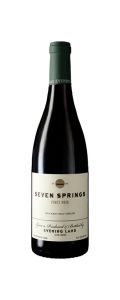
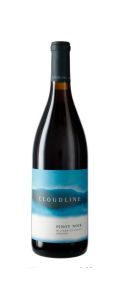
The quintessential grape of Oregon wines is the Pinot Noir variety, although they also produce a wide range of wines with grape varieties such as Cabernet Franc, Riesling, Chardonnay, Cabernet Sauvignon, Lemberger, Garnacha, Alla, Italian-origin Nebbiolo, and Merlot. The resulting wines feature ripe, balanced flavors with their full varietal character.
Oregon is the fourth-largest wine-producing state in the U.S., after California, Washington, and New York, and the second in the number of producing wineries, with more than 300.