

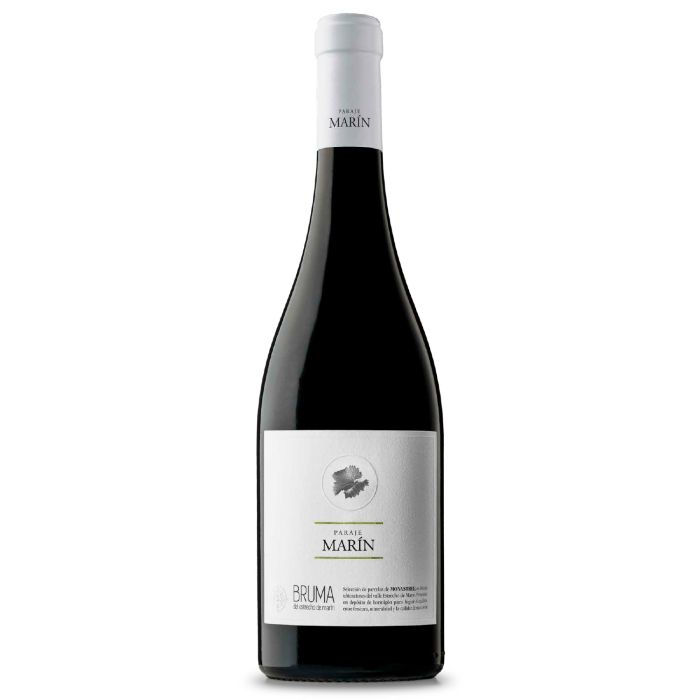
Paraje Marín 2025
Paraje Marín 2025 is one of the magnificent single-vineyard wines made by the Jumilla winery Bruma del Estrecho de Marín from Monastrell grapes, the flagship variety of the D.O.
Paraje Marín 2025 is a young red wine made entirely from Monastrell grapes from different plots located in the Estrecho de Marín Valley, south of the D.O.P. Jumilla. This site, characterised by its warm and dry climate, benefits from a natural contrast between the eastern and western slopes of the valley: the former provide freshness, elegance and minerality, while the latter offer notable, warm ripeness.
Bruma del Estrecho de Marín is the personal project of Elena Pacheco and Isio Ramos, an initiative created to showcase the diversity of Monastrell according to the site, soil and microclimate. The winery is located in the heart of Estrecho de Marín, one of the most distinctive areas of the Jumilla Protected Designation of Origin, and works with a philosophy of minimal intervention, learned directly from local growers. Jumilla, recognised for its winemaking tradition and commitment to authenticity, finds in Bruma one of its most honest and contemporary expressions.
Pairing
Por su estilo jovial y versátil, Paraje Marín 2025 es el vino perfecto para acompañar tapas, sushi, pescados a la plancha como rodaballo o salmón, ensaladas, risottos, pitsas, arroz con conejo y carnes blancas.
Serving temperature
Winemaking
La vendimia se realiza manualmente y la vinificación se lleva a cabo con levaduras autóctonas, fermentación alcohólica en acero inoxidable y maloláctica en depósitos de hormigón, donde el vino permanece durante 7 meses. No se clarifica ni estabiliza por frío con el objetivo de preservar su carácter más puro.
Description
Los viñedos, plantados en vaso sobre suelos calizos muy pedregosos y permeables, tienen entre 15 y 35 años de edad y se cultivan en secano, a una altitud de entre 380 y 400 metros.