

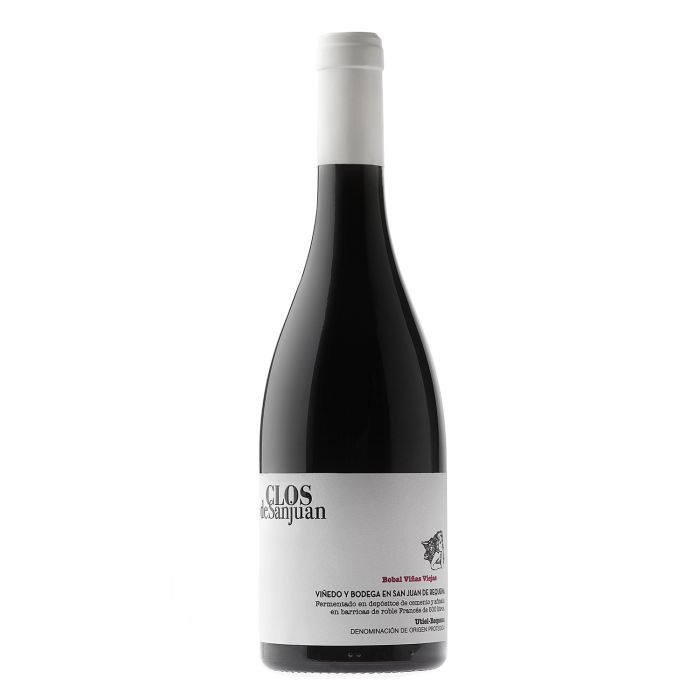
Clos de Sanjuan 2019 is the result of an innovative way of interpreting bobal. It comes from the El Albardín plot: 12 hectares of bobal, 75-80 years old, bush-trained and dry-farmed, with very low yields, worked with sustainable criteria, and made in cement tanks. A 10-month aging in French oak rounds off this magnificent varietal.
Consumption features
Serving temperature
Consumption time
General features
Type of wine
Region
Grape variety
100% Bobal
Type of barrel
500-liter French oak barrel
Capacity (cl)
75
Alcohol content (% vol.)
13.5
General Information
The D.O. Utiel-Requena is the stronghold of the bobal. In this denomination, located in the interior of the province of Valencia, the bobal occupies around 75% of the total vineyard area. Clos de Sanjuan 2019 is a varietal of bobal born from vines aged 75-80 years, fermented in cement tanks and aged in French oak barrels. A fragrant and very complex red, round and broad.
Perfectly adapted to the microclimate of Utiel-Requena, the native bobal grape offers wines with a Mediterranean profile, with good doses of freshness, body, and structure. Clos de Sanjuan shows the interpretation of bobal by a family of Swiss origin, the Valsangiacomo Gil, fifth generation of a saga dedicated to winemaking since 1831, first in the Swiss country and since 1904 in Valencian territory.
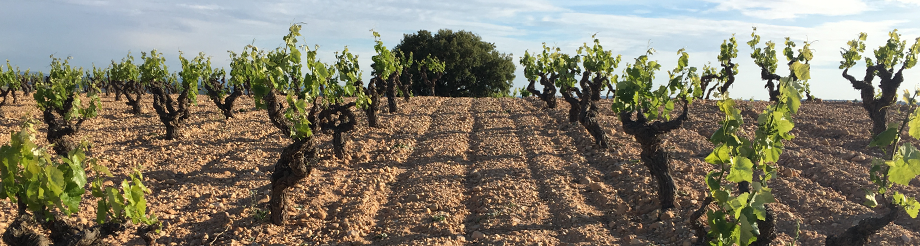
With all the experience accumulated working with bobal in their Chiva winery, they decide to take a step further and open new paths of quality, seeking old vines capable of transmitting the maximum potential of bobal. Thus, they find the El Albardín plot, 12 hectares of old bobal vines, goblet-trained and dry-farmed, with very low yields, located in the village of San Juan, in Requena, which they acquire from the local cooperative and turn into the base of their project Viticultores de SanJuan Bautista. Clos de Sanjuan 2019 is ideal to accompany dishes such as roasted beef tenderloin with pepper or a stewed beef round with mushroom sauce.
The winery
Of Swiss origin, the Valsangiacomo family has been dedicated to the world of wine since 1831, when the winery was founded in Chiasso (Switzerland) under the name Fratelli Valsangiacomo Fu Vittore. In 1904, Cherubino Valsangiacomo, the second generation of the family, settled in the Valencian Community, fleeing the phylloxera plague that devastated the family vineyards in Switzerland, and began producing and marketing wines from native varieties in Utiel and Monovar. The family business was passed down from parents to children successively until reaching the fifth generation, currently at the helm, formed by four of the five children of Arnoldo Valsangiacomo.
This winery in San Juan was previously the local cooperative, founded in 1954, with which the Valsangiacomo family established working ties more than 40 years ago. However, it was in 2009 that the family acquired the winery and began supervising the vineyards of the cooperative members. In 2015, the project was completed with the family’s purchase of a 12-hectare plot of centenary bobal, bush-trained and dry-farmed: the El Albardín plot. Thus, in the Viticultores de SanJuan Bautista project, they produce exclusively from the fruits of the El Albardín plot, a range composed of three wines: the red wines Bobal de Sanjuan and Clos de Sanjuan, and a rosé. In addition to their absolute dedication to bobal, another distinctive feature of Viticultores de SanJuan Bautista is the use of raw concrete tanks for winemaking, built by the local farmers of the village in the mid-20th century.