Do you have any questions?
Monday to Friday from 9am to 20pm
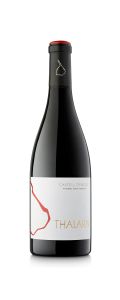
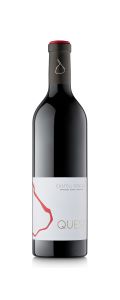
Castell D´Encús
Description
Data of interest
Castell d´Encus was founded in 2001 by Raül Bobet, who sought land in the Catalan Pyrenees to mitigate the effects of climate change on vineyards. It is located in the Pallars Jussà area (Lleida), a predominantly mountainous region.
The altitude of the estate, situated in a mountainous area of the Pallars Jussà region (Lleida), reaches up to 1000 meters above sea level in some parts. It is a location with good sun exposure and surrounded by significant forested areas. Nearby, there is also a historic site consisting of a chapel and ancient grape fermentation presses carved into the stone by the Hospitaller monks in the 12th century.
Out of the 95 hectares of the estate, 23 are planted at high density with a variety of grapes, including cabernet sauvignon, cabernet franc, merlot, pinot noir, syrah, petit verdot, sauvignon blanc, riesling, semillon, and albariño. The rest is preserved as forest.
With a philosophy committed to respecting the environment, no herbicides, insecticides, or chemical products are used, except those permitted in organic farming. Castell d´Encús is also the first winery to use geothermal energy for heat-cold transfer in all its processes, designed to operate by gravity.
Finally, it is worth noting that the harvest is carried out manually in small 10 kg boxes, with grapes sourced exclusively from the estate. Subsequently, the musts are fermented in various materials, such as wooden vats, stainless steel tanks, and natural stone presses.
Foundation year
2001
Owned vineyard
95
Address
Road Tremp to Santa Engracia, km 5.
Telephone
973 252 974
Region
Huesca
Country
Spain