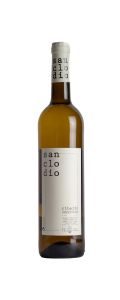
Do you have any questions?
Monday to Friday from 9am to 20pm
Bodega Sanclodio
Description
Data of interest
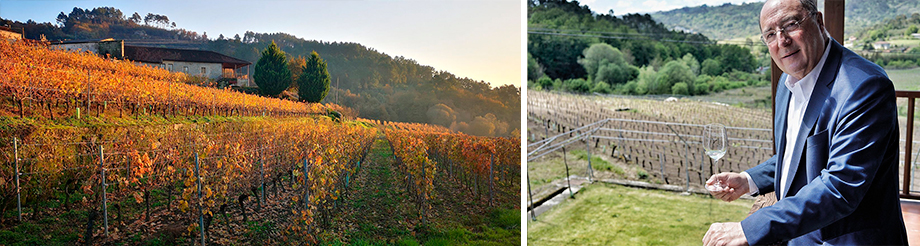
Bodega Sanclodio takes its name from the neighboring monastery, the nerve center of ancient Ribeiro, located in the heart of the Avia Valley. A historic winery whose origins date back to medieval times and was the birthplace of Ribeiro wine.
The winery, situated in Cubilledo, in the parish of Gomariz (Ourense), spans 8 hectares of land and includes a 16th-century manor house. This heritage was acquired by filmmaker José Luis Cuerda in 2002 with the determination to embark on a project dedicated to recovering the ancestral native varieties of Ribeiro.
To achieve this, the filmmaker surrounded himself with a great team and began cultivating traditional grape varieties on the mountainous slopes of the Avia Valley. On terraces over granite soils, vines of treixadura, godello, loureira, caíño blanco, and albariño emerged, cultivated using traditional farming techniques with the goal of producing high-quality wines, with concentration and strong expressiveness, reflecting the unique character of their terroir.
After the passing of the great Spanish director in 2020, the winery is now under the leadership of renowned businessman Carlos Moro, president of Bodegas Familiares Matarromera. A new chapter has begun, without forgetting its origins and the remarkable legacy of the director, screenwriter, and producer from Albacete.
The lands of the D.O. Ribeiro are inevitably influenced by the peninsular Mediterranean character and the maritime profile of the Atlantic. There is a unique interrelation between the two, complemented by a special microclimate found in the Avia Valley itself. These particularities are reflected in the wines of Sanclodio and their production process: grapes ripened slowly to preserve their natural freshness and aromatic profile.
The winery produces wines from the free-run juice obtained through low-pressure pneumatic pressing. The must ferments at a controlled temperature of 16ºC in stainless steel tanks for 15 days until the process is complete. Subsequently, the wine usually rests in contact with its fine lees to maximize its aromatic component, structure, complexity, and aging potential. Finally
Foundation year
2002
Owned vineyard
8
Address
Cubilledo s/n. Gomariz
Telephone
+34 610 006 670
Region
Madrid
Country
Spain