

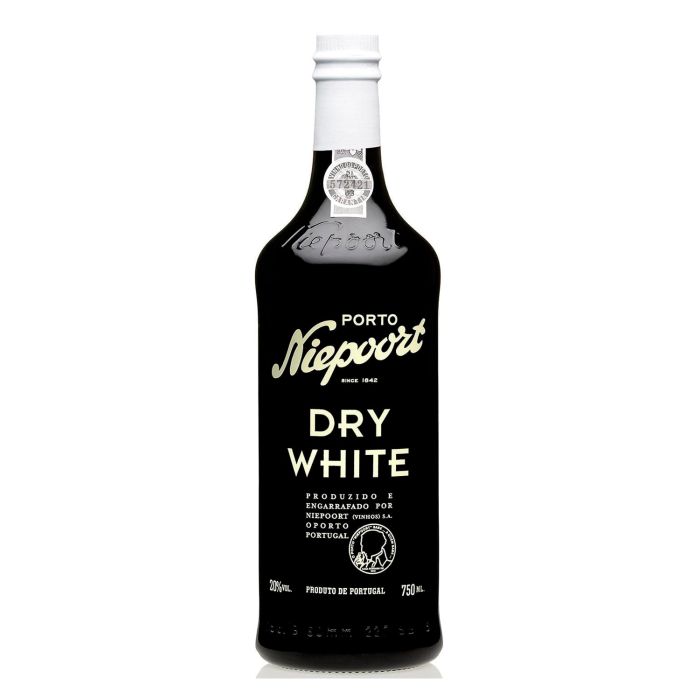
Niepoort Dry White
Singular blanco fortificado
Silver Medal in 2013
Decanter World Wine Awards
Silver Medal in 2013
International Wine Challenge (IWC)
Ideal to drink on its own or as a cocktail, Niepoort Dry White is a perfect fortified white wine for an aperitif. With a slightly sweet taste, it surprises with its hints of walnuts and almonds.
Serving temperature
With an unusual style, Niepoort Dry White is a fortified white wine made from different varieties of white grapes, each subjected to a long maceration with skins and stems to achieve greater aromatic extraction. After fermentation and blending, the wine is fortified and aged for 3 years in oak barrels at the Niepoort winery in Vila Nova de Gaia.
Vila Nova de Gaia is the cradle of aging Port wines. A strategic location by the river and very close to the sea, which constitutes the ideal setting and microclimate for storing wines in large old wooden vats.
There is located Niepoort, an internationally renowned winery with more than 150 years of history. Its extensive portfolio includes wines as unusual as Niepoort Dry White, a fresh wine to enjoy as an aperitif or mixed with tonic, ice, and a slice of lemon.
In appearance, it presents a beautiful golden color with brown reflections.
In the olfactory phase, incredible aromas of dried fruits, mainly almonds, stand out.
Its entry on the palate is fruity, slightly sweet, and on the palate, its pleasant hints of walnuts are surprising. Fresh and concentrated finish.
Niepoort was founded in 1842 by Franciscus Marius van der Niepoort, a Dutchman who emigrated to Portugal with the aim of creating a company that initially focused on the commercialization of Port wines. Gradually, they began producing their own wines by purchasing grapes from small growers, and today they own Quinta de Nápoles and Quinta do Carril in Cima Corgo (Douro Valley), renowned for the exceptional quality of their grapes.
With a family tradition, today Eduard Dirk Niepoort and Verena Niepoort represent the fifth generation leading the winery. Their curiosity about the terroir of the Douro has defined Niepoort’s spirit over the last two decades. The acquisition of estate-owned vineyards, respect for indigenous varieties, and vineyard replanting projects have provided this winery with some of the best raw materials for crafting both fortified and unfortified wines.