


Do you have any questions?
Monday to Friday from 9am to 20pm

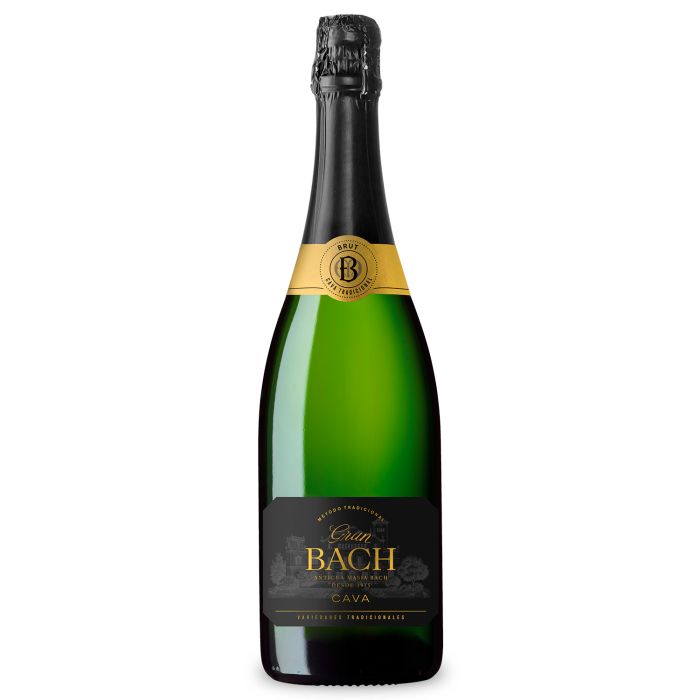
Gran Bach Brut is the result of the typical cava blend with a touch of chardonnay, along with the expertise of one of the oldest wineries in Penedés. Belonging to the Grupo Codorníu Raventós, the Bach winery designs a complex, broad, and elegant cava.
Consumption features
Serving temperature
General features
Region
Grape variety
Macabeo, 0% Xarel·lo, 0% Chardonnay, 0% Parellada
Type of bottle
Champenoise Bottle
Capacity (cl)
75
Alcohol content (% vol.)
11.5
General Information
Gran Bach Brut is the top cava from this almost century-old winery in Penedés. It is made using the traditional method with the typical coupage of the quintessential Spanish sparkling wine -macabeo, xarel·lo, and parellada- with a subtle touch of chardonnay. Gran Bach is not just a cava to uncork for a celebration, but it has enough substance to pair with all kinds of dishes and culinary specialties.
Bach is one of the most historic wineries in Penedés, as well as one of the pioneers in making quality cavas using the traditional or champenoise method. Their range of wines includes still wines (the famous Extrísimos) and sparkling wines, the latter being the ones that have truly given them fame. In 1975, Bach was acquired by the Raventós family, who integrated the winery into the Codorníu Group.
Tasting notes
In appearance, it presents a pale straw yellow color and very fine bubbles with good release.
On the nose, it unfolds clean aromas of green apple, subtle citrus notes and almond blossom, with a background of bakery and honey.
On the palate, it is light and tasty, with balanced acidity. Pleasant and refreshing flow due to a carbonic that is released smoothly.
The winery
In 1915, the brothers Bach i Escopet, Pere and Ramón, moved to Sant Esteve Sesrovires from Barcelona and acquired an 18th-century estate called Can Estrada. Thanks to the profits obtained from the cotton trade, the brothers were able to invest in setting up the winery, which gradually grew with the purchase of new estates, reaching a total area of 365 hectares. The 1920 harvest, based on Xarello and Macabeo, marked the debut of Bach.
The Spanish Civil War disrupted part of the splendor achieved by Bach in the 1920s and had tragic consequences for the family: Ramón died, and his brother Pere, although he survived the conflict, was deeply affected by its memory. A few years later, in 1942, he decided to sell the estate. In the following years, Bach had several owners until, in 1975, the Raventós family acquired the estate and integrated Bach into their group of wineries.