


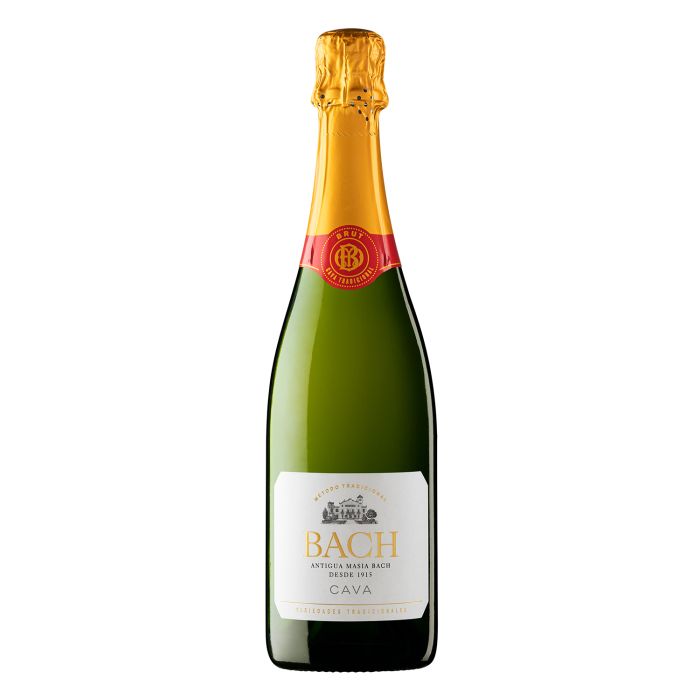
The Cava Bach Brut is defined by its perfect balance between the traditional varieties of the D.O Cava: macabeo, xarel·lo, and parellada. Thanks to its meticulous vinification and aging in the underground cellars of the winery, this Brut sparkling wine stands out for its delicacy and aromatic intensity.
Consumption features
Serving temperature
General features
General Information
The Cava Bach Brut is a Catalan sparkling wine made according to the traditional method through a careful blend of the region's traditional grape varieties: macabeo, xarel·lo, and parellada. Originating from the denomination area that enjoys a more Mediterranean climate, these native grapes show all their typical characteristics. A meticulous production process, culminating in the aging of the wine in rhyme, resulted in a perfumed cava that seduces with its finesse on the palate and balanced acidity.
It was the year 1929 when the Bach brothers founded the winery Masía Bach with the determination to realize their dream of producing unique wines in a singular environment. After decades of history, the spirit and enthusiasm of the brand remain present and are key in the production of quality, original, and different wines and cavas.
Under the D.O. Cava, the Cava Bach Brut is ideal as an aperitif and pairs well with savory tarts, assorted canapés, nuts, and appetizers.
Creators' opinion
Cava Bach Brut presents a pale straw yellow color with fine and well-integrated bubbles. On the nose, it unfolds primary aromas typical of the varieties used (apple, citrus, almond blossom) complemented by aging aromas such as honey and toasted bread. Its fine bubbles stand out in the mouth along with a pleasant and balanced acidity.
The winery
In 1915, the brothers Bach i Escopet, Pere and Ramón, moved to Sant Esteve Sesrovires from Barcelona and acquired an 18th-century estate called Can Estrada. Thanks to the profits obtained from the cotton trade, the brothers were able to invest in setting up the winery, which gradually grew with the purchase of new estates, reaching a total area of 365 hectares. The 1920 harvest, based on Xarello and Macabeo, marked the debut of Bach.
The Spanish Civil War disrupted part of the splendor achieved by Bach in the 1920s and had tragic consequences for the family: Ramón died, and his brother Pere, although he survived the conflict, was deeply affected by its memory. A few years later, in 1942, he decided to sell the estate. In the following years, Bach had several owners until, in 1975, the Raventós family acquired the estate and integrated Bach into their group of wineries.