


Do you have any questions?
Monday to Friday from 9am to 20pm

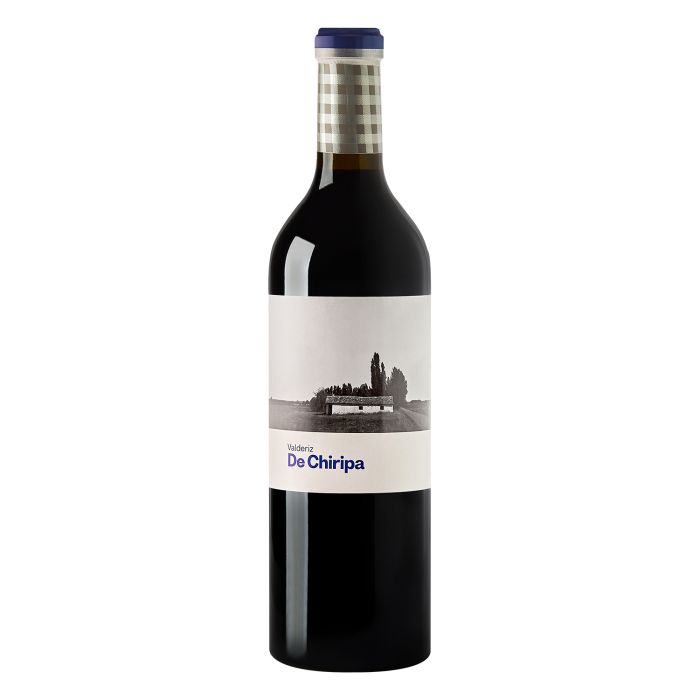
Over 30 years of love for the land are behind Valderiz de Chiripa 2023, created by a family of viticulturists from Roa (Burgos). It originates from one of the family's most important plots, La Guindalera, located at 830 m on a hillside, where Tempranillo vines mature slowly and produce wines with a wonderful freshness, like this one. A fabulous organic Ribera del Duero that is well worth discovering.
Consumption features
Serving temperature
Consumption time
General features
Type of wine
Region
Grape variety
5% Albillo, 95% Tempranillo
Type of barrel
Partial ageing in oak barrels (30%)
Type of bottle
Bordeaux Bottle
Barrel aging time
12 months
Capacity (cl)
75
Alcohol content (% vol.)
14.5
General Information
Valderiz de Chiripa 2023 comes from the La Guindalera plot in Roa (Burgos), within the D.O. Ribera del Duero. The vines grow in highly heterogeneous soils with sandy areas, clay soils, and limestone terrains, with a controlled yield of 5,000 kg/ha. The blend of this red wine includes 95% Tempranillo and 5% Albillo, with vineyard management directed by Juan Esteban following sustainable and certified organic viticulture practices.
The making of Valderiz de Chiripa 2023 involves minimal intervention winemaking: spontaneous fermentation and a very gentle process with limited extraction in cement tanks, aiming to preserve the fruit and expression of the terroir. After fermentation, this red undergoes a 12-month ageing period in different vessels: 50% in foudre, 20% in concrete tanks, and 30% in oak barrels.
Bodegas y Viñedos Valderiz, responsible for Valderiz de Chiripa 2023, is a family-owned winery based in Roa (Burgos) since 1997, when the Esteban brothers started producing and selling their own wines after years dedicated to viticulture. Today, the winery, managed by the Esteban siblings, maintains a vineyard of 100 hectares. Juan supervises vineyard work, committing to organic viticulture, supplemented by biodynamic farming practices; and Ricardo Esteban is the enologist.
Valderiz de Chiripa 2023 (D.O. Ribera del Duero) is ideal to accompany spicy chicken wings or a barbecue pork rack.
Tasting notes
An original, lively wine that moves away from the norms of the region.
The winery
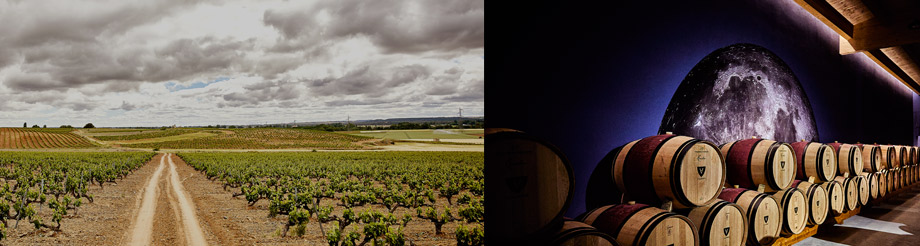
Winery
The origins of Bodegas y Viñedos Valderiz lie in a deep and continuous dedication to the vineyard. In 1980, Tomás Esteban decided to continue the family tradition and fully commit to viticulture. He already owned several vineyards inherited from his father, located in the municipality of Roa in Burgos, in the heart of the Ribera del Duero Denomination of Origin.
In the early years, the Esteban Cristóbal family grew grapes destined for other wineries. However, in 1997, recognising the outstanding quality of their raw material, they took a decisive step: they began to produce and market their own wines. From that moment on, viticulture underwent a major change, significantly reducing yields per hectare to obtain grapes of the highest quality.
Today, the winery is run by the second generation of the Esteban family. Juan manages the vineyards, while Ricardo is responsible for winemaking, both continuing the legacy started by their father.
Valderiz owns 100 hectares of vineyards, all certified under organic viticulture standards. Of this area, 90 hectares were planted by Tomás Esteban, while the remaining 10 hectares come from vineyards inherited from his father, which he chose to preserve. The vineyards are divided into 45 small plots, all located in Roa de Duero. This area features a remarkable variety of soils, mainly pebbles, clay and limestone. The vines, mostly trained in bush form, come from massal selection grafts made on old family vineyards.
The commitment to organic viticulture, complemented by biodynamic farming practices, extends beyond the vineyard to the entire winery. The facilities are designed for maximum efficiency: water consumption and waste are minimised, and part of the energy needs are covered by self-consumption through solar panels installed on the building roof.