


Do you have any questions?
Monday to Friday from 9am to 20pm
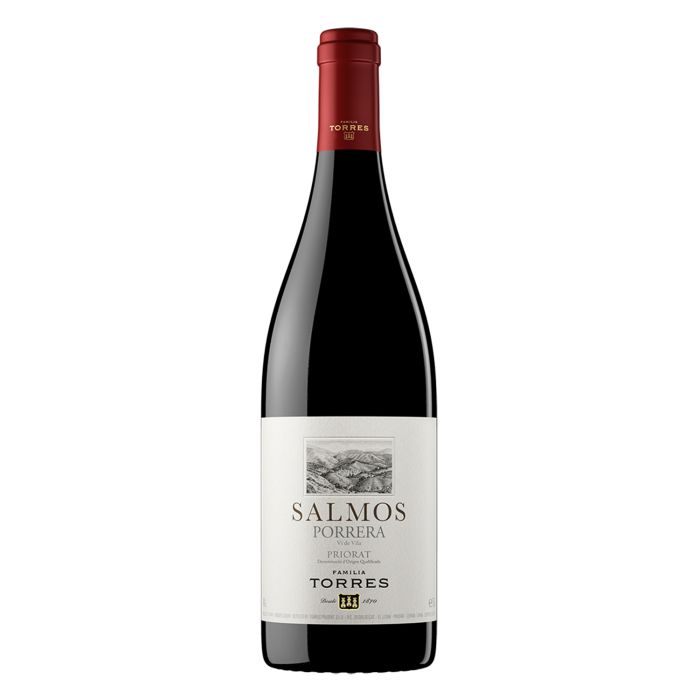
Salmos 2020 está elaborado en homenaje a los monjes cartujos llegados al Priorat en 1095, que acometieron el cultivo de la vid en los escarpados suelos de licorella de la D.O.Q. Depositario de esa magnífica herencia ancestral, este tinto diseñado con cariñena, garnacha y syrah conquista por su nariz concentrada y madura junto a un paladar elegante y seductor.
Consumption features
Serving temperature
Consumption time
General features
Type of wine
Region
Type of barrel
Barricas de roble francés (25% nuevas) y fudres de 30 hl
Type of bottle
Bordeaux Bottle
Barrel aging time
14 meses
Capacity (cl)
75
Total acidity (g/l)
5.5
Sugar
0.8
pH
3.35
Alcohol content (% vol.)
14
Tasting notes
El vino tinto Salmos exhibe un bonito color cereza oscuro, bien cubierto de capa.
En nariz es intenso y concentrado. Su seductora expresión frutal (confitura de frambuesas) culmina en finas notas pasificadas (higos, ciruelas) y un toque de coco y mazapán de almendra.
Boca elegante, seductora y sabrosa. Finísimos taninos aterciopelados que se prolongan en un largo discurrir entre matices tostados. Redondo y persistente.
Creators' opinion
El 2020 fue un año muy lluvioso. Hay que destacar la precipitación torrencial que se dio en enero, además de las elevadas y constantes lluvias de la primera parte del período vegetativo (la primera mitad del año la precipitación superó el registro histórico anual). En cambio, durante el verano no hubo prácticamente lluvia, acentuando la reducción del rendimiento de cosecha. En cuanto a las temperaturas, el inicio de primavera fue frío y, aunque tanto en el ciclo vegetativo como en la maduración las temperaturas mínimas fueron superiores a las habituales, en general se pueden considerar que fueron normales.
The winery

Since their beginnings as winemakers in 1870, the Familia Torres has combined tradition and innovation in the production of prestigious wines and brandies, always working with the utmost respect for the environment. Linked to the land for more than three centuries – with the first references as winegrowers dating back to 1559 – they have historically had wineries and vineyards in Penedès, where they originate, as well as in Conca de Barberà, Priorat, and Costers del Segre. Each generation has contributed to the development of the business and passed on to the next the passion for wine culture, the importance of caring for the land, and the pursuit of excellence.
The fourth generation, led by Miguel A. Torres, introduced the cultivation of cabernet sauvignon in Spain, creating 'Mas la Plana' in 1970, while the fifth generation today focuses on producing wines from unique vineyards and historic estates, as well as recovering ancestral Catalan grape varieties. This project allows for the recovery of viticultural heritage and could become a future solution to climate change due to the ability of these varieties to withstand high temperatures and drought. Additionally, Familia Torres contributes to minimizing the consequences by reducing their CO2 emissions, from the vineyard to the consumer, through the use of renewable energy, sustainable vehicles, energy efficiency measures, reducing bottle weight, regenerative viticulture, reforestation, and more. Their goal is to become a zero net emissions winery by 2040.
Familia Torres is also present with its own vineyards and wineries in Spain's main wine regions – Rioja, Ribera del Duero, Rueda, and Rías Baixas – as well as in Chile and California. They are members of Primum Familiae Vini, an association that brings together twelve of Europe's most prestigious centenary wine-producing families. Familia Torres owns more than 1,100 hectares of vineyards in Spain, 1,000 of which are located in Catalunya and certified as organic by the CCPAE. Most of the vineyards are cultivated using regenerative viticulture techniques.