

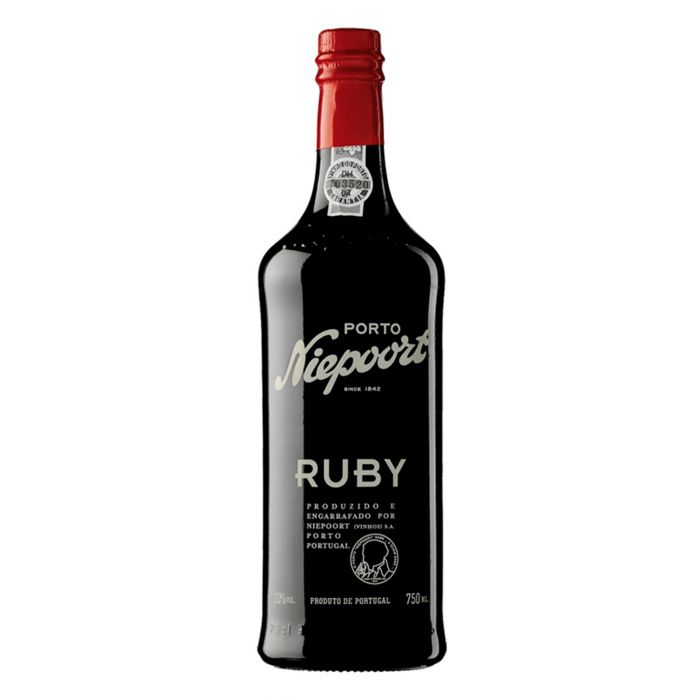
Niepoort Ruby
A ruby in the glass
Silver Medal in 2013
Decanter World Wine Awards
Silver Medal in 2013
International Wine Challenge (IWC)

Do you have any questions?
Monday to Friday from 9am to 20pm
Niepoort Ruby is a fresh, expressive wine full of character that stands out for its pleasant aromas of cherries and plums. Perfect to whet your appetite and introduce yourself to the world of ports.
Serving temperature
Type of wine
Region
Type of barrel
American oak vats
Type of bottle
Porto
Barrel aging time
3 years on average
Capacity (cl)
70
pH
3.67
Alcohol content (% vol.)
19.3
Niepoort Ruby is a youthful and fruity wine made from grapes sourced from a vineyard over 60 years old, located in the Cima Corgo region, in the Douro Valley. For the production of this Port, which gets its name from rubies due to its attractive dark red color, the grapes undergo the traditional process of foot treading in lagares, and after vinification, the wine ages in large wooden vats for at least 3 years.
Founded in 1842, Niepoort is a reference in the production of Port wines. Although its headquarters are located in the heart of Vila Nova de Gaia, the raw material they use comes from the best vineyards in the Douro Valley, where the wines are fermented and later transferred to their main winery.
Niepoort Ruby (D.O. Porto) is a perfect wine to pair with cheeses and dark chocolate-based desserts. Served slightly cooler, it is an ideal wine as an aperitif.
In sight, it shows a beautiful dark ruby color.
On the nose, it is fresh and vibrant, with aromas of red and black fruits -that linger on the palate- and a mineral touch.
On the palate, it is youthful, with good balance and body. Very enjoyable now or for aging.
Niepoort was founded in 1842 by Franciscus Marius van der Niepoort, a Dutchman who emigrated to Portugal with the aim of creating a company that initially focused on the commercialization of Port wines. Gradually, they began producing their own wines by purchasing grapes from small growers, and today they own Quinta de Nápoles and Quinta do Carril in Cima Corgo (Douro Valley), renowned for the exceptional quality of their grapes.
With a family tradition, today Eduard Dirk Niepoort and Verena Niepoort represent the fifth generation leading the winery. Their curiosity about the terroir of the Douro has defined Niepoort’s spirit over the last two decades. The acquisition of estate-owned vineyards, respect for indigenous varieties, and vineyard replanting projects have provided this winery with some of the best raw materials for crafting both fortified and unfortified wines.