


Do you have any questions?
Monday to Friday from 9am to 20pm
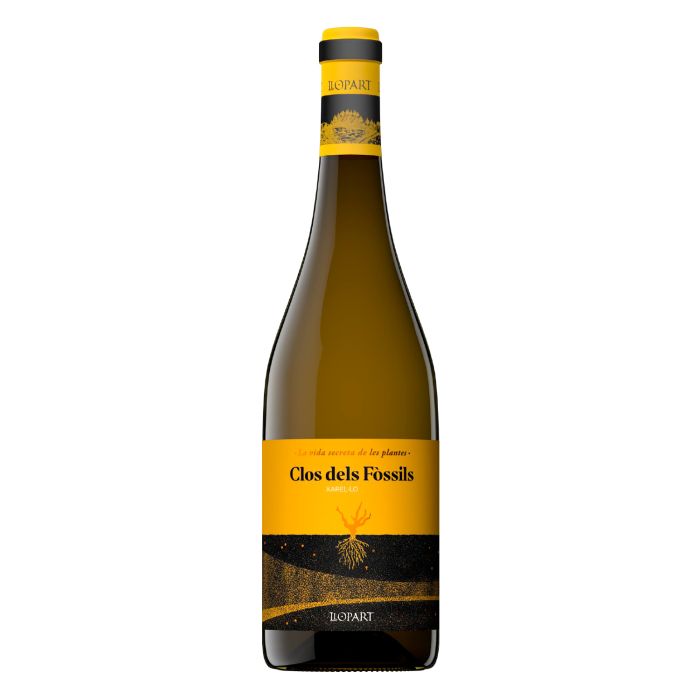
Clos dels Fòssils 2024 is a white wine made entirely from the xarel·lo variety, aged for 6 months in Allier oak barrels with hints of acacia, and subjected to fine lees work to enhance its depth and creaminess.
Consumption features
Serving temperature
General features
Type of wine
Region
Grape variety
100% Xarel·lo
Type of barrel
French oak barrels from Allier and acacia
Type of bottle
Burgundy Bottle
Capacity (cl)
75
Sugar
Inferior a 2
General Information
Located in a unique setting, in the municipality of Subirats, in the mountainous area of Alt Penedès, the Can Llopart estate encompasses 500 hectares of vineyard and forest at an average altitude of 360 meters above sea level. The 100 hectares of estate-owned vineyards are the essence of Llopart's personality, cultivated organically, following sustainable farming practices, with the utmost respect for the environment. This is how they produce their 100% xarel·lo Clos dels Fòssils 2022, a deep and complex wine thanks to its aging on lees in French oak barrels.
Tasting notes
Bright straw-yellow color.
On the nose, it combines the freshness of primary aromas of white and stone fruits with notes of toasted nuts and dry leaves.
On the palate, it is very balanced, structured, and elegantly glyceric. It perfectly integrates its time in the barrel and offers a good balance between liveliness and volume. The aftertaste is smooth, pleasant, and long-lasting.
The winery

In the Penedès region, the Llopart family has been dedicated to vine cultivation since 1385, an occupation that became exclusive in the 18th century. In 1887, they launched their first wine on the market and became one of the pioneering firms in the production of quality sparkling wines.
The Llopart family owns the Heredad Can Llopart de Subirats, where the farmhouse and 60 hectares of their own vineyards are located along a hillside. Its particular topography and orientation allow the fruits to benefit from one of the greatest thermal variations in the Penedès, favoring the ripening process. Additionally, the Llopart family has divided the estate into three terroirs based on the different subsoils and microclimatic variations, enabling them to adapt each variety and vine clone to the most suitable terroir.