Do you have any questions?
Monday to Friday from 9am to 20pm
Domaine Henri Magnien
Description
Data of interest
Domaine Henri Magnien is one of the oldest family estates in Gevrey-Chambertin and one of the most interesting contemporary references in the Côte de Nuits. Although the modern domaine was founded in 1987, the Magnien family has been cultivating vines in Gevrey since 1656, accumulating more than twelve generations of uninterrupted winemaking knowledge. Today, under the direction of Charles Magnien, the estate is enjoying strong international recognition, combining historical heritage, technical precision and an extremely fine interpretation of Burgundian Pinot Noir.
The Magnien family’s roots in Gevrey-Chambertin date back to the 17th century. However, Domaine Henri Magnien as such was created in 1987, when Henri Magnien decided to bottle and commercialise his own production, laying the foundations of the current project. Later, the estate passed to his son François and, since 2009, it has been led by Charles Magnien — the twelfth generation. Since his arrival, Charles has driven a profound qualitative transformation focused on vineyard work, lower yields and minimal-intervention winemaking, establishing the domaine among the most respected names in modern Gevrey.
The domaine cultivates approximately 6 to 7 hectares of vineyards, mainly in Gevrey-Chambertin, with small but highly significant parcels in the Côte de Beaune. Its vineyard holdings include some of the finest climats of the appellation, such as the Grand Cru Ruchottes-Chambertin and the Premiers Crus Lavaux Saint-Jacques, Les Cazetiers, Estournelles-Saint-Jacques and Champeaux. These plots feature clay-limestone soils rich in stones, optimal exposures and relatively old vines, many planted between the late 19th and early 20th centuries. This diversity allows a precise and structured interpretation of Pinot Noir in Gevrey-Chambertin.
One of the most distinctive elements of the domaine is the so-called Pinot Magnien, a historic mutation of Pinot Noir identified by the family around 1850. This ancestral clone, with small berries and thick skins, is preserved through massal selection and used systematically for vine replanting. Its adaptation to Gevrey’s soils and climate gives the wines greater natural concentration, aromatic depth and a structure that allows for very gentle extraction without losing definition or energy.
Vineyard work is one of the pillars of Charles Magnien’s philosophy. Viticulture is essentially manual, inspired by organic farming practices and with very limited use of treatments, always prioritising the natural balance of vine and soil. Cover crops, careful pruning and canopy management promote even ripening. The aim is to achieve full physiological maturity while preserving freshness, acidity and terroir expression. In the cellar, Charles Magnien favours precise, low-intervention winemaking. After manual harvesting with triple sorting, the grapes undergo several days of cold maceration followed by spontaneous fermentations with indigenous yeasts, mainly in stainless steel tanks. The use of whole clusters is very moderate and depends strictly on the lignification of each vintage. Extraction is gentle, favouring pump-overs over punch-downs. Ageing takes place in French oak barrels — mainly from Cavin cooperage — with levels of new oak adjusted to each cuvée, reaching up to 100% for the Grands Crus.
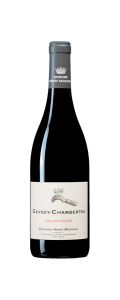
Wines from Domaine Henri Magnien are defined by silky texture, aromatic depth and notable mineral tension. Far from overly powerful styles, they aim for elegance, transparency and ageing potential that places the finest cuvées among the key references of Gevrey-Chambertin. Production is exclusively focused on red Pinot Noir, from Gevrey-Chambertin Village and Vieilles Vignes to a highly regarded range of Premiers Crus and the Grand Cru Ruchottes-Chambertin. Cuvées such as Les Cazetiers, Lavaux Saint-Jacques and Estournelles-Saint-Jacques faithfully reflect the diversity of the northern climats of the appellation.
Foundation year
1987
Owned vineyard
7
Country
France