Do you have any questions?
Monday to Friday from 9am to 20pm
Bodega Manuel Quintano Labastida
Description
Data of interest
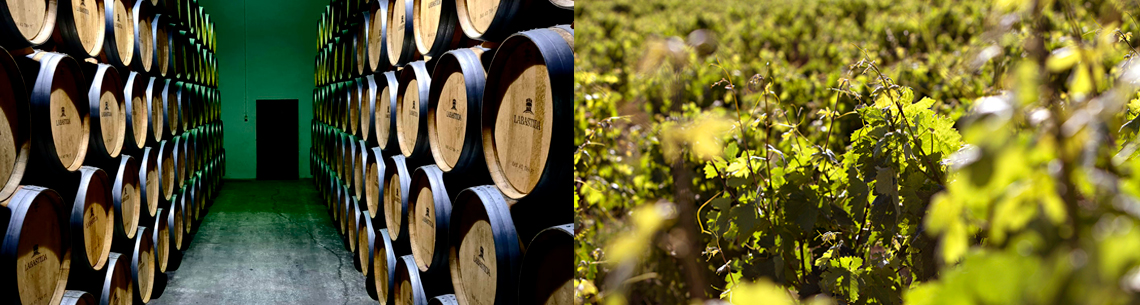
Labastida, with a long-standing winemaking tradition, is located in the northwesternmost area of Rioja, in the highest region of Rioja Alavesa, which results in fresh, aromatic wines with great aging potential. A small municipality sheltered by the Sierra del Toloño and nourished by the Ebro River, it is one of the most favorable areas in Rioja for vine cultivation.
In the mid-1960s, several winemakers from Labastida decided to join forces and founded the Unión de Cosecheros de Labastida, which today is the largest cooperative winery in the Basque Country and is known as Bodega Manuel Quintano. Over the years, this company has implemented numerous changes aimed at developing an artisanal production process and giving great prominence to the vineyard and the soil.
Thus, for winemaking, they use small tanks, with completely manual pump-overs and punch-downs, parcel by parcel... Fermentations are spontaneous, with the idea of allowing each vineyard to express the character of the soil. Subsequently, each parcel's wine ages separately in barrels, enabling visitors to taste several wines from different parcels with unique profiles. The winemaking process is personalized and based on grape tasting prior to harvest. No two productions are the same, and tasting is the main driver of decision-making in the winery throughout the year.
The winery has two wine ranges:
-Solagüen / Labastida Range. This is the traditional range. It includes young wines, a semi-sweet white, and wines with different types and lengths of aging in French and American oak barrels.
-Manuel Quintano Range. This represents the premium range and pays tribute to Manuel Quintano, who introduced modern enology to Rioja in 1786 after his trip to Bordeaux. The project comprises the 50 best hectares of the winery's vineyards, where old vines play a prominent role. These wines are made in small tanks with maximum parcel separation and age in concrete or French oak.
Foundation year
1964
Address
Avenida diputación 53
Region
Madrid
Country
Spain