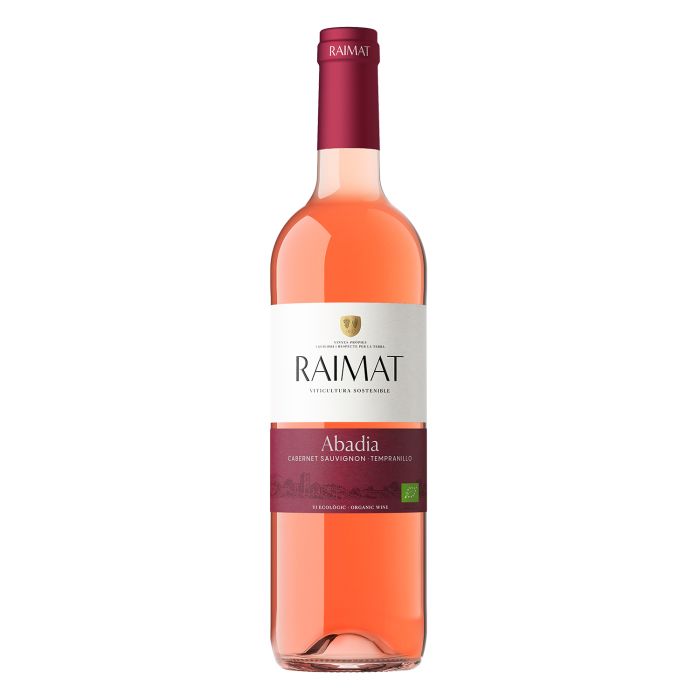
Raimat Abadia Rosado Ecológico 2024 embodies –along with its red and rosé counterparts– the essence of Raimat, the oldest winery in the D.O. Costers del Segre. Born from an ecological philosophy, from the vineyard to the glass, the production of this coupage of tempranillo and cabernet sauvignon used only the free-run juice, with the aim of achieving an elegant, fresh wine with great aromatic complexity.
Raimat Abadia Rosado Ecológico 2024 encarna -junto a sus homólogos tinto y rosado- la esencia de Raimat, la bodega más antigua de la D.O. Costers del Segre. Fruto de una filosofía ecológica, desde la viña a la copa, en la elaboración de este coupage de tempranillo y cabernet sauvignon solo se empleó el mosto flor, con el empeño de obtener un vino elegante, fresco y con una gran complejidad aromática.
Friendly entry with a pleasant freshness; voluminous, balanced, and with great length. Mid-palate, we rediscover those strawberry notes that appeared on the nose and some hints of cherry that give it a fruity and refreshing finish.
Raimat Abadia Rosado Ecológico is a gastronomic wine par excellence that pairs perfectly with a wide variety of dishes. Ideal for enjoying with all kinds of tapas. It can be paired with oily fish (tuna, salmon, or sardines). A perfect complement to rice, legume salads, vegetables, and poultry such as quail or pheasant.
When Manuel Raventós acquired the barren lands of the Raimat estate in 1914, in a desert-like area of Lleida, almost bordering the Los Monegros desert, few believed he was in his right mind. Almost 90 years later, Raimat is a thriving estate with 2,100 hectares dedicated to vineyard cultivation, still in the hands of the Raventós family, owners of the Grupo Codorníu.
The first Raimat winery dates back to 1918 and was designed by the eminent modernist architect Rubió i Bellver. A subsequent expansion in 1988, carried out in line with the latest trends in ecological architecture and landscape integration, gave the winery its definitive appearance. Raimat was one of the first brands to cultivate foreign varieties almost unknown in Spain at the time and to adopt trellis training, leaving behind the classic and traditional bush vine.