

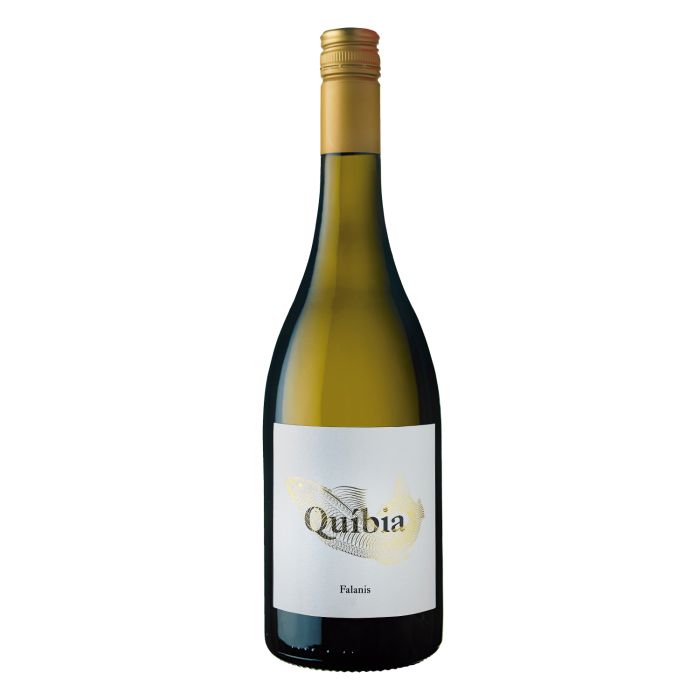
Quíbia 2024
Discover the Mallorcan white wine Quíbia 2024, practically a ‘blanc de noirs’ full of freshness, elegance and minerality, with a pleasant salty touch.

Do you have any questions?
Monday to Friday from 9am to 20pm
Discover the Mallorcan white wine Quíbia 2024, practically a ‘blanc de noirs’ full of freshness, elegance and minerality, with a pleasant salty touch.
Quíbia 2024 is the result of a unique blend of the white Prensal Blanc and the red Callet and Giró Ros varieties, all native to Mallorca. Fermented and aged on its lees for three months, this white wine from Ànima Negra – practically a blanc de noirs – is full of freshness, elegance and minerality, with a pleasant salty touch that will win you over from the very first sip.
Serving temperature
Type of wine
Region
Grape variety
Type of bottle
Burgundy Bottle
Capacity (cl)
75
Quíbia 2024 comes from traditional bush-trained vineyards cultivated using sustainable methods, located in the Felanitx area (Mallorca), where the influence of the sea and the Mediterranean breezes deeply influence the wine’s profile.
The calcareous clay soils, with a sandy texture and shallow depth, coupled with a Mediterranean climate with mild temperatures and 400–450 mm of annual rainfall, ensure balanced ripening and preserve the natural acidity of the Premsal Blanc and Giró Ros varieties.
The grapes were harvested by hand in 10-kg crates, starting with the Giró Ros at the end of August and continuing with the Prensal Blanc in early September. At the winery, they were cooled for 12 hours and sorted twice, once manually and once optically, berry by berry, to ensure the highest quality. The varieties were processed separately: short maceration, very gentle pressing, racking and alcoholic fermentation at 17°C using native yeasts. The wine was aged for three months on its own lees in 7,000-litre stainless steel tanks to enhance its texture, complexity and length.
Founded in 1994, Ànima Negra is the brainchild of two Mallorcan friends – Pere Obrador and Miquel Àngel Cerdà – who were determined to revive and champion the island’s native grape varieties. The winery is located on the historic estate of Son Burguera, a thirteenth-century building near Felanitx. Since it started out, the winery has operated with a philosophy based on absolute respect for the terroir, minimal intervention and the use of native yeasts, creating wines that faithfully express the Mallorcan landscape and character. Quíbia 2024 is a perfect ambassador of this approach. Enjoy it with oysters, clams or prawns, seafood rice dishes and grilled or pan-fried white fish. It also pairs perfectly with light Asian dishes or an assortment of smoked fish.

The Ànima Negra winery is the story of two friends from Mallorca (Miguel Ángel Cerdá and Peré Obrador) who, in 1994, embarked on the foundation of a personal project with the determination to produce high-quality wines using the island's native grape varieties. To achieve this, they transformed a dairy into the space dedicated to winemaking.
Today, Ànima Negra is a benchmark for authentic, personal, and high-quality wines on the island of Mallorca. Their wines now go beyond the borders of the Balearic island, being exported to more than 40 countries worldwide.
Located in the southeast of the island, the winery produces its wines in the old ‘possessió’ of Son Burguera, near the town of Felanitx. The first production took place in this historic building, and from there, the facilities were improved to craft high-quality wines.
They have a vineyard made up of around 150 micro-plots located around the winery, with the exception of 5 vineyards in the western part of Mallorca. They primarily grow old vines of callet, mantonegro, fogoneu, premsali blanc, and giró ros on various types of soil. Later, the grapes are harvested manually.
Ànima Negra's goal is to create genuine wines with a personality that reflects the land where they are made, without artifice, while recovering the island's grape varieties. As they aptly state, “We must carry out oenology in the field, and the winery should only be a temple for preserving the authenticity of the relationship between the plant, the soil, and the climate.”