


Do you have any questions?
Monday to Friday from 9am to 20pm

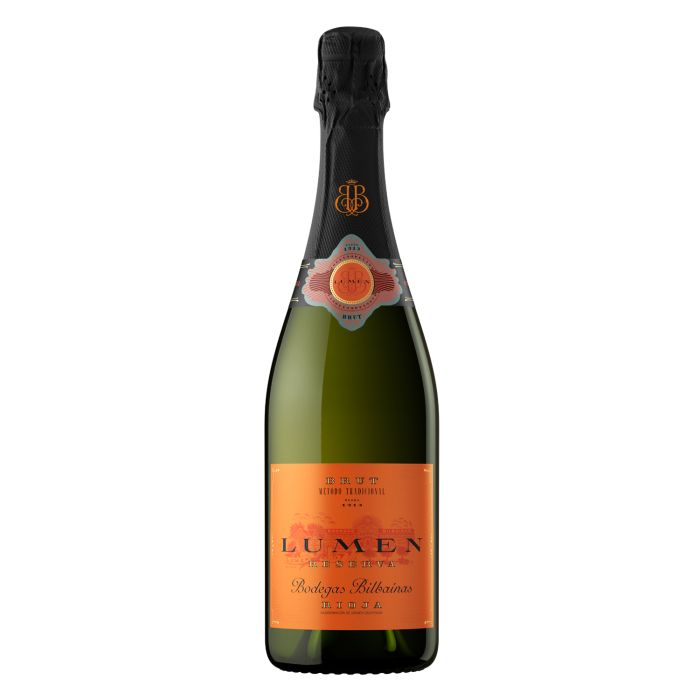
The sparkling wine Lumen Brut is produced in the D.O.Ca. Rioja by the historic winery Bodegas Bilbaínas. With a minimum of 24 months of aging on lees, this intense and vibrant blanc de noirs pays tribute to the city of Haro, one of the first in Spain to have electric street lighting. Friendly, fresh, and well-balanced, Lumen Brut is proof that there are also excellent sparkling wines outside of Catalonia.
Consumption features
Serving temperature
General features
Type of wine
Region
Grape variety
100% Garnacha tinta
Barrel aging time
24 months in rima
Capacity (cl)
75
Alcohol content (% vol.)
12
General Information
Due to its organoleptic characteristics, the espumoso de Rioja Lumen Brut is the perfect companion for grilled fish, seafood, shushi, and cheese dishes.
Creators' opinion
Yellow-golden appearance with steely nuances. Nose: Intense and fresh. Both notes of red fruits and white fruits and citrus appear. Slightly spicy. Palate: Fresh and pleasant, well balanced. Vibrant and harmonious.
The winery

Winery
Oenologist
Winemaker
Located in the famous wine region of the Barrio de la Estación in Haro, Bodegas Bilbaínas is one of the historic and benchmark wineries in Rioja. Its origins date back to 1859, when the Bordeaux house Savignon Frères et Cie, fleeing the phylloxera plague, settled in Haro to produce and export wine to France. In 1901, a group of entrepreneurs from Bilbao acquired the facilities, also building a new and monumental winery with underground cellars. Thus, the Bodegas Bilbaínas company was definitively established.
In a short time, its wines gained a strong reputation. So much so that in 1925, this house was honored with the title of Supplier to the Royal Household and Heritage. In 1997, the winery became part of the Grupo Codorníu, undergoing a profound renovation of its facilities and vineyards, as well as a modernization of its wine styles.
Today, Bodegas Bilbaínas boasts an exceptionally extensive estate-owned vineyard in La Rioja: 250 hectares spread across the Haro region, within the subzone of Rioja Alta; and it has enviably solid brands that encompass different styles: from the most classic Viña Pomal, to La Vicalanda (Alta Expresión) and the more modern and youthful Viña Zaco.