

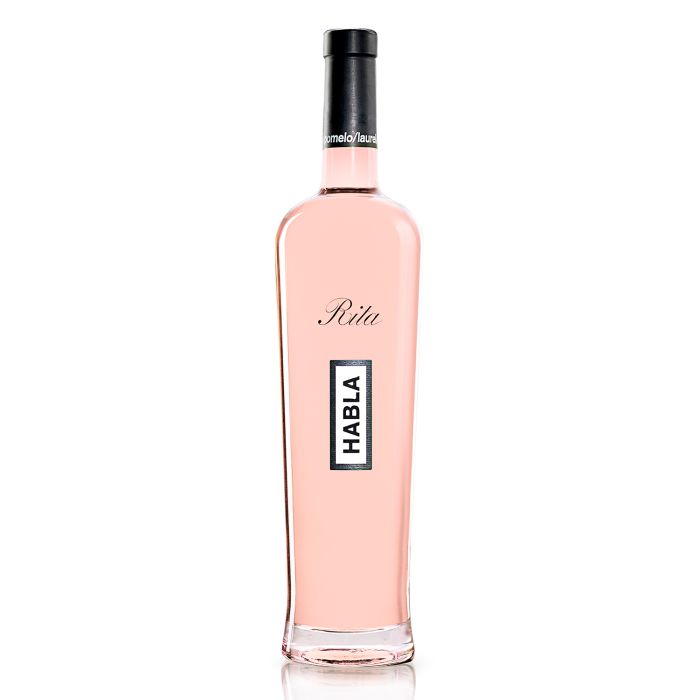
Habla Rita 2025
Elegant rosé with character
Habla Rita 2025 is a Provençal rosé that pays tribute to Rita Hayworth's Gilda. In this case, the slap is exquisite and aromatic.

Do you have any questions?
Monday to Friday from 9am to 20pm
Habla Rita 2025 is a Provençal rosé that pays tribute to Rita Hayworth's Gilda. In this case, the slap is exquisite and aromatic.
If there is one winery that has placed the wines of Extremadura at the very top, it is undoubtedly Bodegas Habla. Habla Rita 2025 brings together all the characteristics of a rosé from Provence (France), and shows the utmost expression of the varieties that make it up: syrah and garnacha. The result is an elegant wine with plenty of personality.
What sounded like science fiction 20 years ago is now a reality. Bodegas Habla is the winery that has brought prestige to Extremaduran wine and the winery from Extremadura with the greatest presence on the national scene. A winery that has understood an area with deep-rooted winemaking tradition, and has crafted wines of excellent character and typicity, such as this Habla Rita (V.T Extremadura).
Serving temperature
View
Atractivo color rosa pálido con ligeros toques fucsia.
Nose
Fresco e intenso carácter a pomelo con matices muy sutiles de violeta, laurel y frutas rojas del bosque.
Mouth
Suave, redondo, delicado, desarrolla abundantes notas de frambuesa o fresa, con un final largo y lleno de matices.

Habla is one of the most advanced wineries in our country, responsible for elevating the wines of Extremadura to the highest level and erasing at a stroke the dubious reputation of the wines from this region. Its modern facilities and vineyard (200 hectares divided into plots) are located on an estate in the town of Trujillo, with shallow soils composed of slate and granite, good texture, and low fertility, which, together with the continental climate, favor optimal ripening and limited yields.
Bodegas Habla has introduced various innovations in the region both in the vineyard, where it is committed to ecological practices, and in winemaking. For instance, in the vineyard, it has implemented cover crops between the cultivation rows to control erosion, prevent nutritional depletion, and avoid the environmental impact of herbicides and CO2 emissions from tractors; it also employs the shade policy: arranging vegetation on the trellises in a shaded manner, ensuring slightly cooler ripening conditions and addressing the issue of excessive warmth. Additionally, it follows very strict traceability for each of the plots.
As for winemaking, it is committed to minimal intervention, allowing the typicity of the region, the character of the grape varieties, and the complement of French oak to define the style. This way, they create wines of excellent character and typicity, easy to drink, and notable for their original aesthetics.